Nicotine Pouch Strength Explained: What 3 mg, 6 mg, and 12 mg Actually Mean
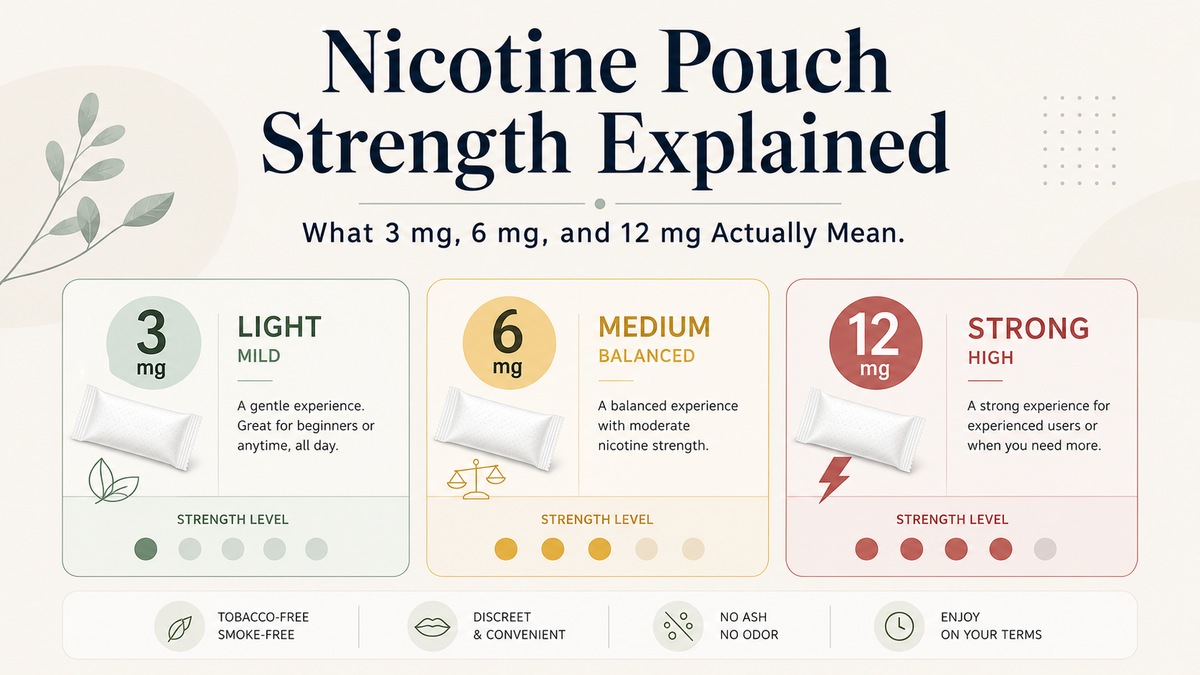
If you've ever picked up a can that says 12 mg and thought, "Wait... is this normal?" you're not alone.
Nicotine pouch strength looks straightforward. But the way it's labeled and the way it actually feels are not always the same thing. Here's the real world explanation, without the chemistry lecture.
What "mg" means on the label
Most of the time, the number on the can means milligrams of nicotine per pouch.
So:
3 mg = about 3 mg in each pouch
6 mg = about 6 mg in each pouch
12 mg = about 12 mg in each pouch
Easy.
But sometimes brands label nicotine per gram, not per pouch, and that's where people get confused.
The common confusion: per pouch vs per gram
Some cans will say something like "20 mg/g." That does not mean 20 mg per pouch.
It means 20 mg of nicotine per gram of pouch material. And pouches are not always 1 gram.
So you could have:
A smaller pouch with a higher mg/g number
A bigger pouch with a lower mg/g number
And they might feel closer than you'd expect
If you are trying to compare brands, check whether the label is per pouch or per gram, because it changes the math.
Why a 6 mg pouch can feel stronger than a 12 mg pouch
This part surprises people, but it happens.
The mg number tells you how much nicotine is in the pouch. It does not tell you how fast it hits or how it feels in your mouth.
A few things that change the experience:
Moisture
Moist pouches usually feel smoother and can hit faster. Dry pouches can feel harsh and inconsistent.
Pouch size
Bigger pouches can release differently even if the nicotine amount is similar.
Formulation
Some products are made to absorb faster, so they feel stronger even with a lower number.
How you use it
If you keep moving it around or you use pouches back to back, the effect stacks.
So yeah, sometimes the "lower" one feels like more.
A simple strength guide that makes sense
Not medical advice. Just a practical guide.
2 mg to 4 mg
Light. Usually the safest place to start if you are unsure.
5 mg to 8 mg
Middle ground. This is where a lot of regular users land.
9 mg to 12 mg
Strong. Not crazy, but definitely noticeable.
13 mg and up
This is the "you better know what you're doing" range.
How to pick the right strength without ruining your day
If you are choosing between strengths, think about these 3 things:
-
Do you want a mild buzz or a real hit
-
How many pouches do you plan to use in a day
-
Do you hate the nauseous, sweaty, dizzy feeling more than anything
If you're on the fence, go lower. You can always move up later.
Going too strong first is the easiest way to have a bad experience and never want to touch them again.
Signs you went too strong
If you feel any of these, take it out and give yourself a minute:
Nausea
Sweating out of nowhere
Shaky hands
A head rush that feels bad, not fun
Random hiccups
That's your body basically saying, "Alright... we're done here."
How long does the "strength" last
Most people keep a pouch in for around 20 to 60 minutes.
But the strongest part usually happens earlier. After that it tapers down and becomes more of a steady background effect.
Also, if you haven't eaten, everything hits harder. That one catches people off guard.
One storage tip that actually matters
Heat and air mess with freshness. And freshness affects how consistent a pouch feels.
Keep the can sealed and stored somewhere cool. If they dry out, the taste drops and the feel gets rougher.
The takeaway
The mg number is a starting point, not the full story.
Look for whether it is per pouch or per gram, start lower if you are unsure, and remember that formulation can make a "small" number hit big.
That's it. You now understand nicotine pouch strength better than most of the internet.